During the spring trimester, the final Integrated Studies Unit brought every class at PCS together around a single topic: the history, culture, and mechanics of marine transportation. Across eight classrooms, students considered how humans and animals move through the water and what that’s meant to life on Long Island.
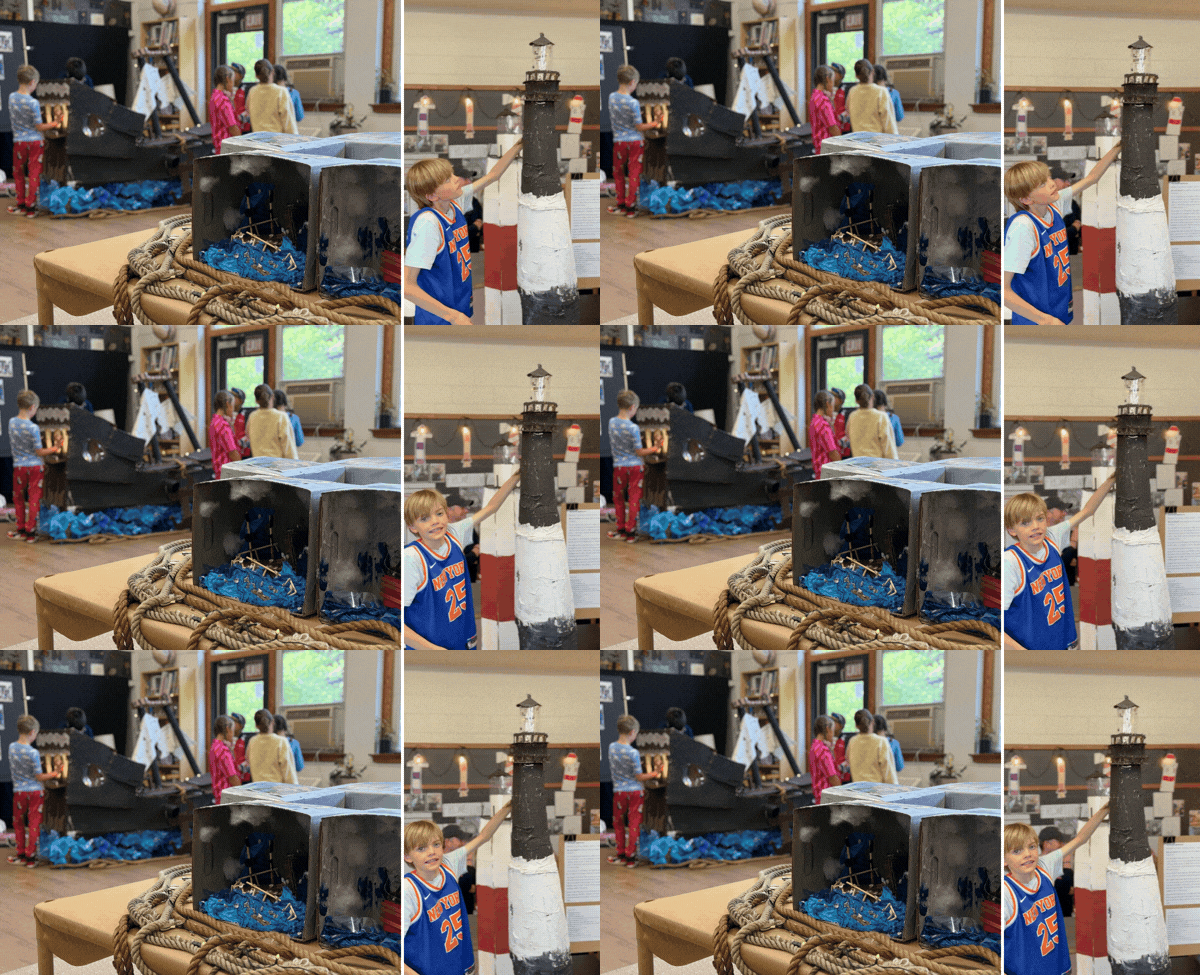
Early Childhood 3/4 studied ferries, learning the parts of a boat, nautical terms and how ferries connect island communities. EC 4/5 followed a fascination with sharks into the birth and early life of shark pups. Kindergartners studied marine locomotion, from how whales swim to the hitchhiking life of barnacles. First graders turned to whaling and whaling boats, looking at Long Island's indigenous history with the trade. Second graders took on the mechanics of shipbuilding, studying the simple machines and principles of buoyancy that keep vessels afloat, and engineering their own boats. Third graders explorers discovered the Friar's Head Wreck off Reeve’s Beach before building (and wrecking!) a Spanish galleon in their classroom. Fourth and fifth graders experimented with how Fresnel lenses concentrate light, and traced how lighthouses have guided generations of sailors along our rocky shorelines. And middle schoolers examined how centuries of maritime activity shaped New York City, Southold Town, and the communities that grow around a harbor.
The unit culminated in PCS’s signature Celebration of Learning, with the whole school’s study laid out room by room, from shipwrecks and ferry boats, to towering lighthouses and swimming sea turtles. Students welcomed families into their transformed classrooms and stood amidst their projects and research to walk visitors through how it all works, why it matters and what it’s taught them. There is no clearer proof of learning than children who can take you through their work, from start to finish. We are so proud of the ambitious and thoughtful learning our students accomplished this trimester.